
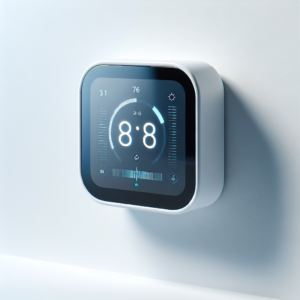
Smart thermostats are becoming increasingly popular among homeowners and business owners. In today’s trend toward home automation, smart thermostats stand out among competitors due to their efficiency, convenience, and eco-friendly design. If you’re still using a traditional thermostat to manage your home’s temperature, it may be worth considering upgrading to a smart thermostat. This article explores the main advantages of smart thermostats and explains why they have become an essential part of smart homes.
Energy Saving and Emissions Reduction
Smart thermostats optimize temperature settings by learning your daily routines. This means they can adjust temperatures at different times of the day, ensuring energy isn’t wasted when you’re not home. For example, if you wake up at 6 a.m. every day, the thermostat can gradually warm your home beforehand so it reaches your ideal temperature just as you’re getting ready to leave. This efficient usage not only improves comfort but also significantly reduces energy bills.
Self-Learning Features and Efficiency
Smart thermostats are typically equipped with powerful learning algorithms that automatically adjust settings based on your preferences. Over time, you’ll notice a reduction in energy costs. Studies show that households using smart thermostats can save an average of 10% to 15% on heating and cooling expenses. For homeowners looking to maximize energy efficiency, this is a major advantage.
Convenient Operation
In the past, adjusting a thermostat required manual changes at the device itself. Now, smart thermostats can be controlled via mobile apps or voice assistants. This means you can monitor and adjust your home’s temperature anytime, anywhere, as long as you have an internet connection. Imagine coming home to fresh air and a perfectly comfortable temperature after being out.
Practicality of Remote Control
For instance, if you forget to lower the air conditioning while at work, even a small oversight can lead to higher electricity bills. With a smart thermostat, you can simply use your phone to adjust the settings. Some models even send alerts when unusual energy usage is detected, allowing you to make timely adjustments and minimize waste.
Environmental Benefits and Sustainability
Using a smart thermostat not only provides convenience but also contributes to environmental protection. By optimizing household energy use, smart thermostats help reduce greenhouse gas emissions and combat global warming. Choosing such an efficient device is a meaningful step toward supporting sustainable development.
Reducing Your Carbon Footprint
As awareness of climate change grows, many households are taking steps to reduce their carbon footprint. Smart thermostats not only save energy and money but also play a positive role in environmental protection. As many environmental organizations advocate, change starts with small actions. Choosing a smart thermostat can be your first step toward contributing to a greener planet.
Improved Home Safety
Modern smart thermostats are more than just temperature regulators. They can help prevent issues like freezing pipes and fire hazards. Many devices include temperature monitoring features that send alerts when abnormal conditions occur. For example, if indoor temperatures drop too low and increase the risk of frozen pipes, the thermostat can warn you in advance to prevent potential damage.
Fire Prevention Features
Some smart thermostats also include smoke detection capabilities. When smoke or abnormal temperature increases are detected, the device can automatically shut off heat sources or adjust temperatures to reduce fire risk. This added protection provides greater safety for you and your family.
Enhanced Home Comfort
Another key advantage of smart thermostats is their ability to create a more comfortable living environment. Ideal temperatures vary depending on individuals and situations, and smart thermostats can automatically maintain comfort levels based on the preferences of all household members.
Precise Environmental Control
Whether during cold winters or hot summers, maintaining a comfortable indoor temperature can be challenging. Smart thermostats use sensors and climate monitoring to accurately detect changes and adjust temperatures accordingly. This precision ensures a living environment that is both comfortable and energy-efficient.
Long-Term Investment Value
Although the initial cost of a smart thermostat may be higher, it is a worthwhile long-term investment. Its efficiency leads to significant savings on energy bills over time, offsetting the upfront expense. Additionally, smart thermostats can increase property value.
Increasing Property Value
When selling a home, having smart home features like a smart thermostat can attract more potential buyers. Buyers are often willing to pay more for homes equipped with modern smart technology. This is one of the key reasons why more homeowners are choosing to invest in smart thermostats.
Conclusion
In summary, smart thermostats offer numerous benefits, including energy efficiency, convenience, environmental friendliness, and improved safety. These devices not only provide a seamless user experience but also enhance comfort and security in your home. If you’re looking for a smarter and more sustainable lifestyle, a smart thermostat is an ideal choice. Keeping your home up to date while enjoying the benefits of modern technology is well worth it.